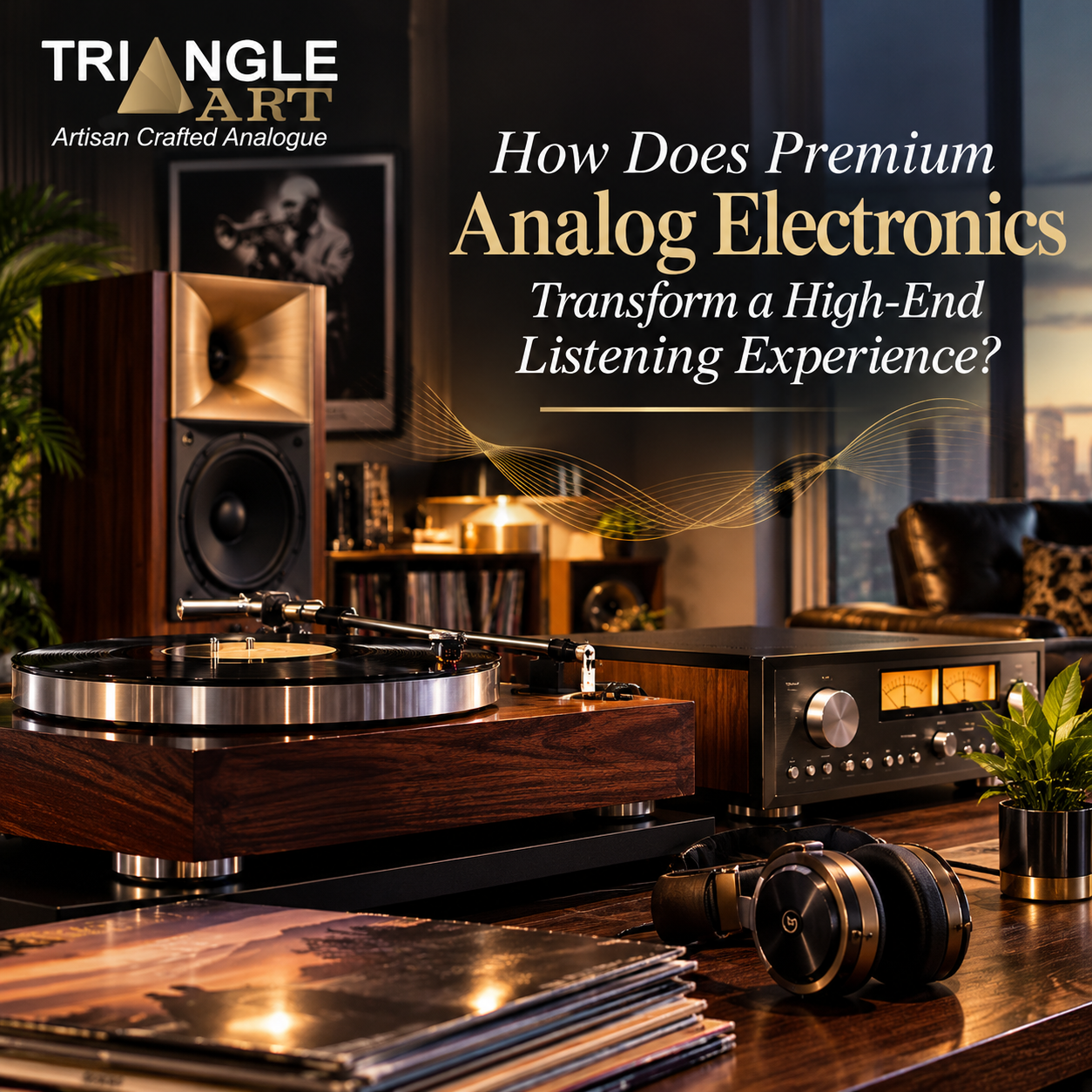
Summary – The blog explores how premium analog audio electronics enhance sound quality through precise signal processing, circuit design, and effective component integration. It covers phono preamplifiers, tube and solid-state designs, system compatibility, and craftsmanship for a balanced, natural, and immersive listening experience.
A high-end audio system is more than a collection of expensive components. Its performance depends on how accurately each component handles the music signal and how well the entire system works together. From the initial signal produced by a turntable cartridge to the amplification that drives a loudspeaker, every stage plays a role in the listening experience.
For listeners who value vinyl playback, natural musical expression, and carefully engineered equipment, premium analog audio electronics offer a way to build a system around precision and thoughtful design. The goal is not simply to make music louder or reveal more detail. It is to reproduce recordings with clarity, balanced tonality, and convincing dynamics.
Understanding Analog Electronics in High-End Audio
Analog electronics process continuously varying electrical signals. In a vinyl playback system, the cartridge converts the physical movement of the record groove into a small electrical signal. That signal then passes through several electronic stages before reaching the loudspeakers.
A phono preamplifier boosts the cartridge’s low-level output and applies the required RIAA equalization. A line-stage preamplifier manages functions such as source selection and volume control, while a power amplifier provides the energy needed to drive the speakers.
Each component serves a different purpose, but its performance also depends on the surrounding equipment. Poor electrical matching, excessive noise, or unsuitable gain settings can limit the results, even when individual components are well designed.
Why Circuit Design Matters to Sound Quality
The internal design of an audio component influences how it handles an incoming signal. Circuit topology, power-supply stability, grounding, and component selection can affect noise, distortion, and reliable operation.
Tube and solid-state electronics use different approaches to amplification. Tube designs appeal to many listeners because of their circuit characteristics and particular sound presentation. Solid-state designs offer other implementation options, including different approaches to gain, output capability, and power delivery. Neither technology automatically guarantees better sound; execution and system compatibility matter more than the label.
Power supplies are equally important. Audio circuits need stable operating conditions to reproduce changing musical signals consistently. Careful grounding and power-supply design can also help reduce unwanted interference, particularly in circuits handling the tiny signals generated by moving-coil cartridges.
How a Phono Preamplifier Shapes Vinyl Playback
Vinyl playback places specific demands on an audio system because a cartridge produces a relatively small electrical signal. The phono preamplifier must amplify that signal and apply the correct RIAA equalization before sending it to the next stage. Its gain, noise performance, and cartridge compatibility can therefore influence the overall playback quality.
Moving-magnet and moving-coil cartridges have different electrical requirements. A suitable phono stage should provide appropriate gain and loading options to help the cartridge operate as intended. Poor matching can introduce noise or prevent the system from delivering its full potential.
Triangle Art’s P-200 Tube Phono is an example of a component designed for this stage of playback. Its design uses two low-noise triode gain stages with passive RIAA equalization between them. This illustrates how circuit topology and equalization choices contribute to a phono preamplifier’s engineering.
Talk to the Triangle Art team about phono stages, preamplifiers, amplifiers, and how they work together.
Building a Balanced High-End Audio System
Even excellent individual components cannot guarantee excellent results when they are poorly matched. A cartridge, phono stage, preamplifier, power amplifier, and loudspeakers must operate as a coordinated system.
When evaluating high end music system electronics, consider these important factors:
Upgrading one component at a time can help identify where improvements are most useful. For example, a vinyl system with an unsuitable phono stage may benefit more from correcting that mismatch than from replacing an already capable power amplifier.
Craftsmanship and Long-Term Ownership
Sound quality is central to high-end audio, but construction and long-term usability also matter. Chassis rigidity, internal component layout, grounding, and vibration management are practical engineering considerations. Their importance depends on how effectively they support the design.
Triangle Art combines precision manufacturing with carefully selected electronic components. Its equipment reflects an emphasis on mechanical construction and the integration of individual components. However, appearance, material choice, or weight alone cannot establish a component’s sonic performance.
For buyers considering audiophile grade audio electronics, flexibility and serviceability deserve attention alongside build quality. Suitable input and output options, cartridge support, and compatibility with existing equipment can make a component easier to incorporate into a system over time.
Buyers should also consider their future plans. A phono preamplifier, for example, should suit the current cartridge and turntable while offering appropriate flexibility for potential upgrades. This helps create a system that can evolve without requiring unnecessary replacements.
Conclusion
Premium analog electronics contribute to a high-end listening experience through careful signal handling, appropriate amplification, and effective integration between components. Circuit design, power-supply performance, cartridge matching, and construction all influence how equipment performs within a complete audio system.
The most effective approach is to evaluate the entire playback chain rather than focus on one specification or technology. By considering compatibility, technical performance, and listening preferences, audiophiles can make more informed decisions when exploring Triangle Art’s phono stages, preamplifiers, and amplifiers.
Have questions about phono stages, preamplifiers, amplifiers, or matching them with your system? Get in touch with the Triangle Art team.
(714) 553-6474
Anaheim, CA 92808, USA
Frequently Asked Questions